
Azure vs AWS for Australian Businesses: Complete 2024 Comparison Guide

Choosing the right cloud platform is one of the most critical decisions Australian businesses face in their digital transformation journey. With Microsoft Azure and Amazon Web Services (AWS) dominating the cloud landscape, the choice between these two giants can significantly impact your business operations, costs, and compliance posture.
For Australian small to medium businesses (SMBs), this decision carries additional weight due to unique considerations like data sovereignty requirements, local support availability, and regional pricing structures. At CloudGeeks, we specialize in cloud infrastructure and migration services for Australian businesses, and we’ve helped numerous organizations navigate this critical decision. In this comprehensive guide, we’ll break down the key differences between Azure and AWS specifically from an Australian business perspective, helping you make an informed decision that aligns with your organisation’s needs and growth objectives.
Understanding the Australian Cloud Landscape
Australia’s cloud adoption has accelerated dramatically, with 95% of businesses now using some form of cloud services according to recent industry reports. However, Australian businesses face unique challenges that their international counterparts may not encounter.
Data sovereignty remains a primary concern, particularly for businesses in regulated industries such as finance, healthcare, and government sectors. The Australian Privacy Principles (APPs) under the Privacy Act 1988 and sector-specific regulations like the Notifiable Data Breaches scheme create additional compliance layers that influence cloud platform selection.
Both Azure and AWS have established significant infrastructure presence in Australia, but their approaches differ substantially. Azure operates data centres in Melbourne and Sydney through their Australia East and Australia Southeast regions, while AWS maintains similar regional presence with additional edge locations across major Australian cities.
The choice between these platforms often comes down to more than just technical capabilities – it’s about finding the right fit for your business model, existing technology stack, and long-term strategic goals.
Data Sovereignty and Compliance: A Critical Comparison
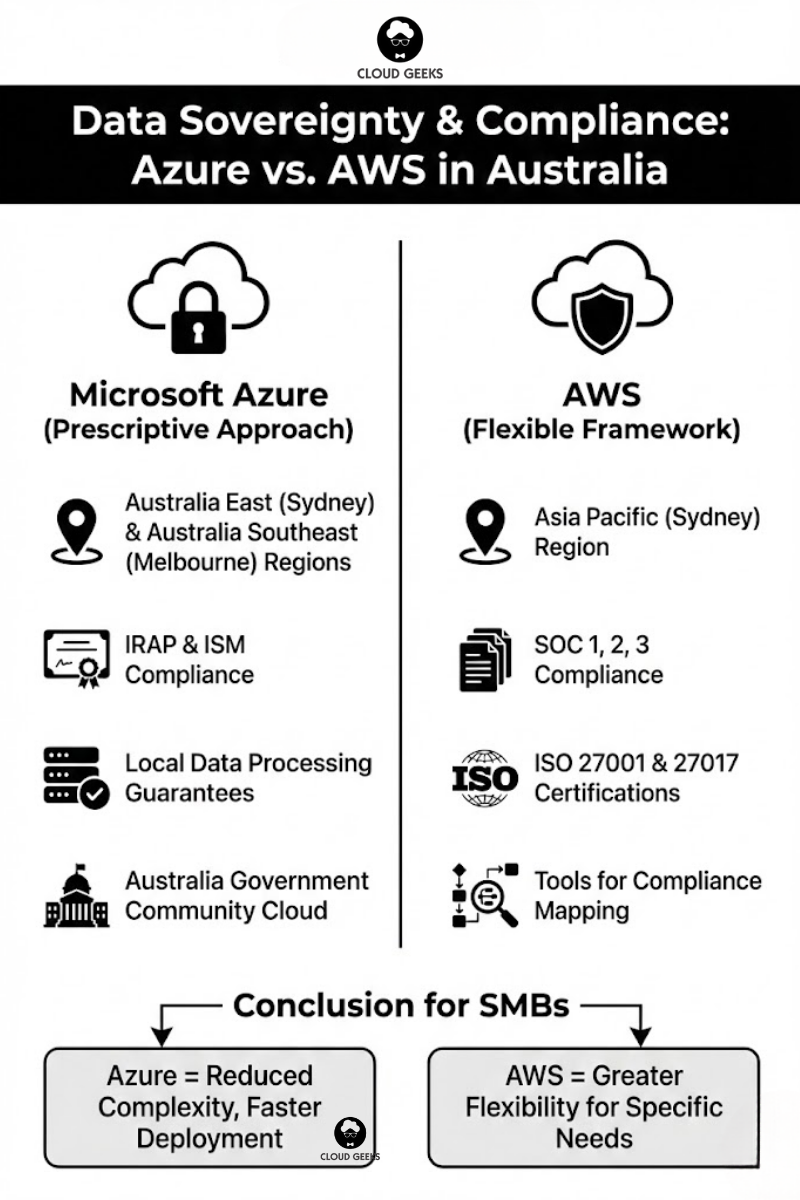
For Australian businesses, data sovereignty isn’t just a preference – it’s often a legal requirement. Understanding how Azure and AWS handle Australian data residency and compliance is crucial for making the right choice.
Microsoft Azure’s Australian Approach
Azure has made significant commitments to the Australian market, particularly around data sovereignty. Their Australia East (Sydney) and Australia Southeast (Melbourne) regions ensure that data can remain within Australian borders. Microsoft has also established the Australia Government Community Cloud, specifically designed for government agencies and their partners.
Key Azure compliance advantages include:
- IRAP (Information Security Registered Assessors Program) assessment completion
- Australian Government ISM (Information Security Manual) compliance
- Local data processing and storage guarantees
- Transparent data handling policies with clear Australian data residency options
AWS’s Compliance Framework
AWS operates the Asia Pacific (Sydney) region and has achieved various Australian compliance certifications. Their approach focuses on providing tools and frameworks that enable customers to maintain compliance rather than offering pre-configured compliant environments.
AWS compliance strengths include:
- SOC 1, 2, and 3 compliance across Australian regions
- ISO 27001 and ISO 27017 certifications
- Comprehensive audit trails and monitoring capabilities
- Extensive documentation for compliance mapping
For most Australian SMBs, Azure’s more prescriptive approach to compliance often translates to reduced complexity and faster deployment of compliant solutions, while AWS offers greater flexibility for businesses with specific compliance requirements.
Cost Analysis: Australian Pricing Realities
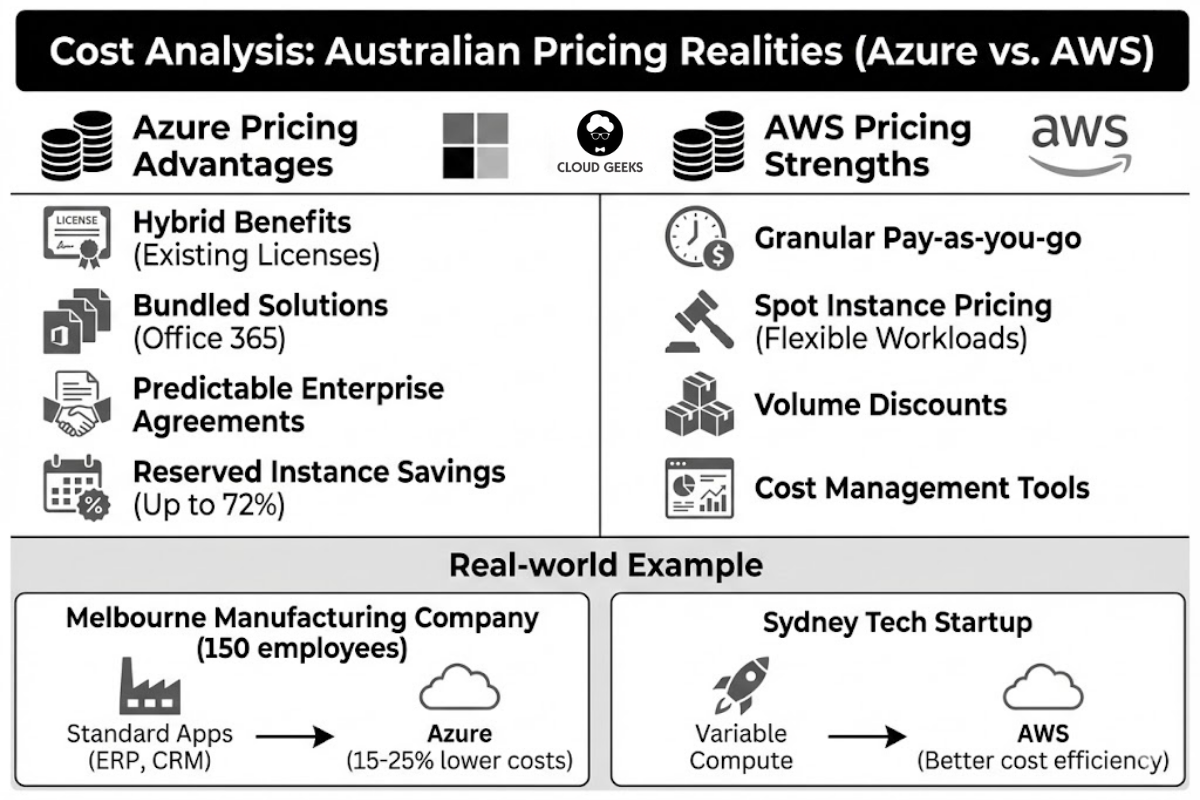
Pricing structures between Azure and AWS can vary significantly when viewed through an Australian business lens. Currency fluctuations, local taxation, and regional pricing strategies all impact the total cost of ownership.
Azure Pricing Advantages
- Hybrid Benefits: Azure offers significant discounts for businesses with existing Microsoft licenses through the Azure Hybrid Benefit program
- Bundled Solutions: Integration with Office 365 and other Microsoft products often provides cost efficiencies
- Predictable Enterprise Agreements: Established EA (Enterprise Agreement) structures familiar to many Australian businesses
- Reserved Instance Savings: Up to 72% savings with reserved instances across compute, storage, and database services
AWS Pricing Strengths
- Granular Pay-as-you-go: More precise usage-based pricing that can benefit businesses with variable workloads
- Spot Instance Pricing: Significant cost reductions for flexible, non-critical workloads
- Volume Discounts: Aggressive pricing for high-volume users
- Cost Management Tools: Sophisticated budgeting and cost optimisation tools
Real-world Example: A Melbourne-based manufacturing company with 150 employees running standard business applications (ERP, CRM, file storage) typically sees 15-25% lower costs with Azure when factoring in existing Microsoft license investments. However, a Sydney tech startup with variable compute requirements might achieve better cost efficiency with AWS’s granular pricing model.
The key is conducting a detailed TCO (Total Cost of Ownership) analysis that includes licensing, support, training, and operational costs, not just infrastructure pricing. Once you’ve selected your cloud platform, understanding the complete ROI picture is essential. Learn more in our guide on the true ROI of cloud migration.
Service Capabilities and Integration
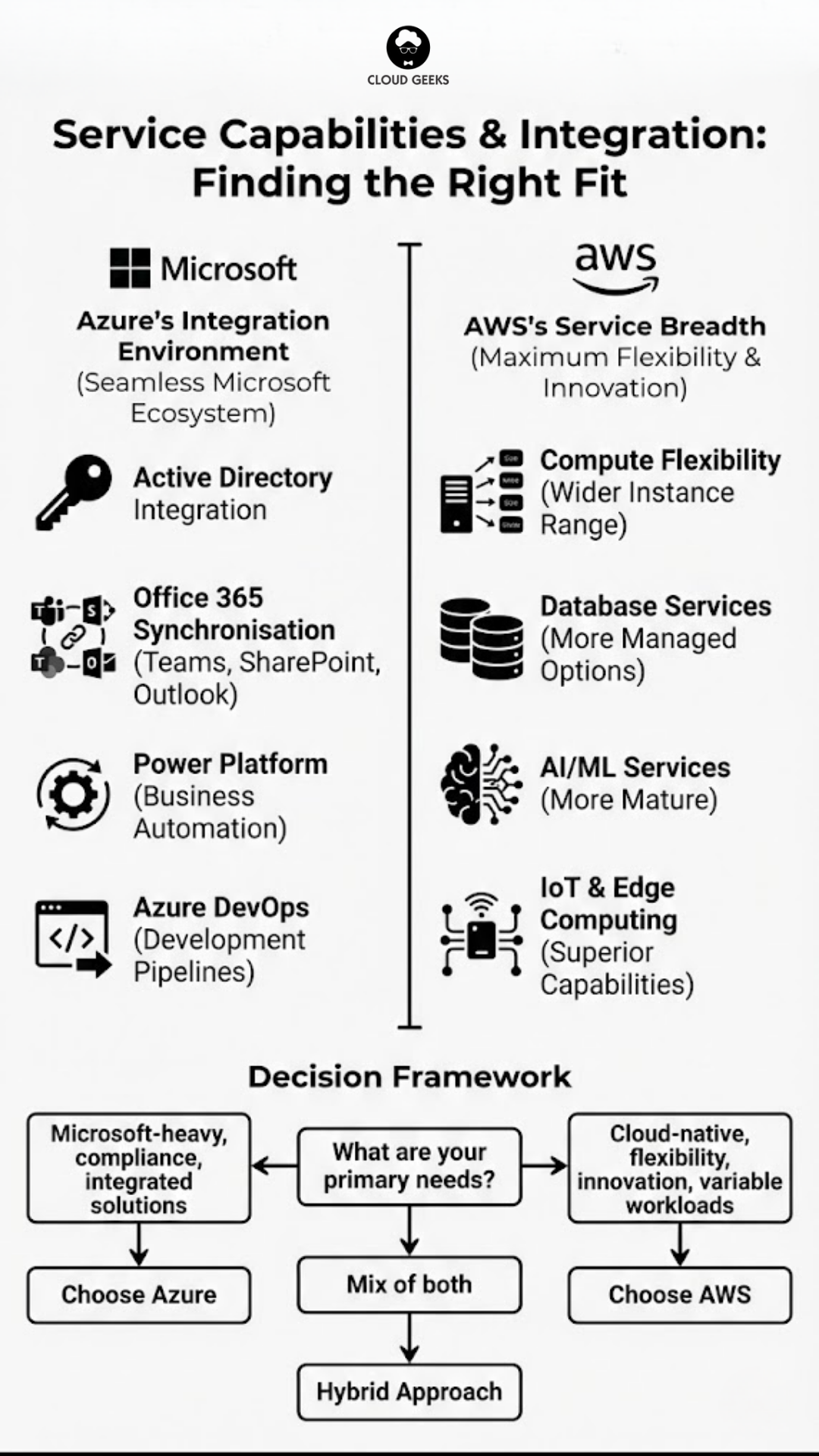
When evaluating Azure versus AWS for Australian businesses, service capabilities and integration potential with existing systems often prove more important than raw feature counts.
Azure’s Integration Environment
Azure’s strongest advantage lies in its seamless integration with Microsoft’s business environment. For the 85% of Australian businesses already using Microsoft Office, this integration provides immediate value:
- Active Directory Integration: Seamless identity management across cloud and on-premises resources
- Office 365 Synchronisation: Native integration with Teams, SharePoint, and Outlook
- Power Platform: Low-code/no-code solutions for business automation
- Azure DevOps: Comprehensive development and deployment pipelines
AWS’s Service Breadth
AWS offers the broadest range of cloud services, with over 200 fully-featured services spanning compute, storage, databases, analytics, and emerging technologies:
- Compute Flexibility: Wider range of instance types and compute options
- Database Services: More database engines and managed database options
- AI/ML Services: More mature artificial intelligence and machine learning services
- IoT and Edge Computing: Superior edge computing and IoT management capabilities
Industry-Specific Considerations
- Professional Services Firms: Azure’s integration with Office 365 and familiar Microsoft tools often provides faster adoption and better user acceptance
- Retail and E-commerce: AWS’s scalability and global content delivery network often better supports variable traffic patterns
- Manufacturing: Azure’s IoT and industrial solutions, combined with existing ERP integrations, frequently offer better value
- Technology Companies: AWS’s broader service catalog and developer-focused tools often provide more innovation opportunities
Local Support and Partner Environment
The quality and availability of local support can make or break your cloud implementation success. Both platforms have invested heavily in Australian market presence, but with different strategies.
Azure’s Australian Presence
Microsoft has established a substantial Australian operation with local support teams, sales engineering, and extensive partner networks:
- Direct Microsoft Support: Australian-based technical support with local business hours coverage
- Partner Network: Extensive network of local Microsoft partners with deep Azure expertise
- Training and Certification: Regular local training programs and certification opportunities
- Industry Focus: Dedicated teams for government, education, and enterprise sectors
AWS’s Local Environment
AWS has built a strong Australian presence through strategic partnerships and local hiring:
- AWS Professional Services: Local consulting and implementation support
- Partner Network: Growing environment of AWS-certified local partners
- Training Programs: AWS Training and Certification programs delivered locally
- Startup Support: Strong focus on supporting Australian startups and scale-ups
Practical Support Considerations
For SMBs, the practical reality is that your chosen implementation partner often matters more than the cloud provider’s direct support. However, Azure’s integration with existing Microsoft relationships often provides smoother support escalation paths for businesses already working with Microsoft partners.
Making the Right Choice: Decision Framework
Selecting between Azure and AWS requires a structured evaluation approach that considers both technical requirements and business realities.
Choose Azure When:
- Your business heavily relies on Microsoft Office 365 and Windows-based applications
- Data sovereignty and simplified compliance are primary concerns
- You prefer integrated solutions over best-of-breed approaches
- Your team has existing Microsoft expertise and certifications
- You’re in a regulated industry requiring specific Australian compliance standards
Choose AWS When:
- You need maximum flexibility and the broadest range of cloud services
- Your applications are cloud-native or Linux-based
- You have variable, unpredictable workload patterns
- Innovation and access to emerging technologies are priorities
- You operate in industries requiring global scale and distribution
Hybrid Considerations
Many Australian businesses don’t need to choose exclusively. A multi-cloud or hybrid approach can use the strengths of both platforms:
- Use Azure for Office 365 integration and compliance-sensitive workloads
- Use AWS for development environments and innovative projects
- Implement cloud management tools that provide unified oversight
Conclusion: Your Cloud Journey Starts with Strategy
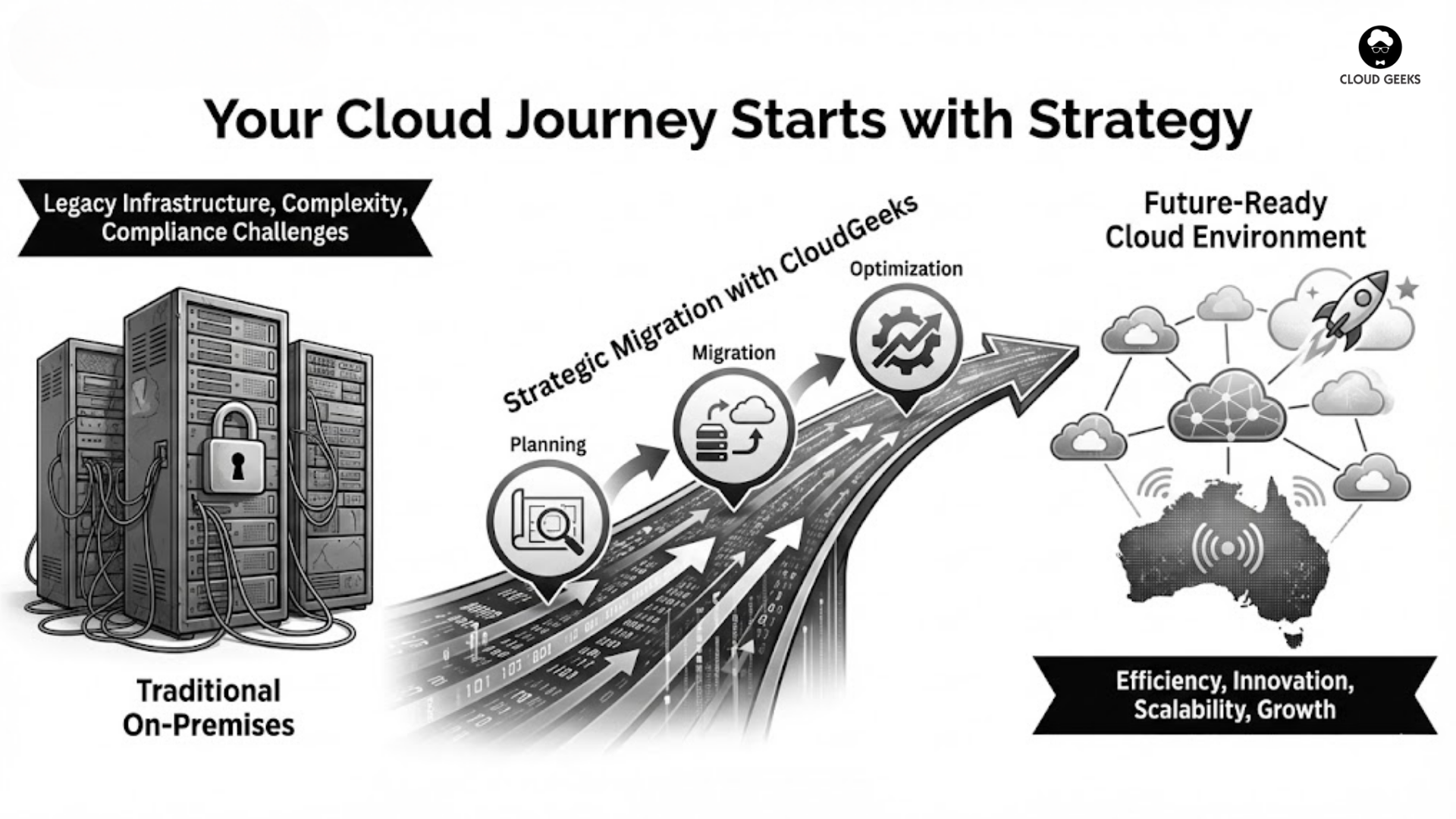
The choice between Azure and AWS for Australian businesses isn’t about finding the universally “better” platform – it’s about identifying the right fit for your specific requirements, constraints, and aspirations.
Azure typically provides the path of least resistance for businesses already invested in the Microsoft environment, offering strong integration, simplified compliance, and familiar support structures. It’s particularly well-suited for traditional enterprises undergoing digital transformation while maintaining existing business processes.
AWS offers greater flexibility and innovation potential, with the broadest service catalog and most mature cloud-native capabilities. It’s often the preferred choice for businesses prioritising scalability, technical flexibility, and access to cutting-edge services.
Key Takeaways:
- Start with Business Requirements: Technical capabilities matter, but business fit and user adoption often determine success
- Consider Total Cost of Ownership: Look beyond infrastructure pricing to include licensing, training, and operational costs
- Prioritise Compliance Early: Australian data sovereignty requirements can significantly influence platform choice
- Use Local Expertise: Partner with Australian cloud specialists who understand local requirements and best practices
- Plan for Evolution: Your cloud needs will change – choose a platform and partner that can grow with your business
The cloud transformation journey is ultimately about enabling your business to operate more efficiently, innovate faster, and serve customers better. Whether you choose Azure, AWS, or a combination of both, success depends on aligning your cloud strategy with your business objectives and executing with the right local expertise.
Ready to start your cloud journey? The CloudGeeks team specialises in helping Australian businesses navigate these complex decisions and implement cloud solutions that drive real business value. Contact our cloud experts today to discuss your specific requirements and develop a cloud strategy tailored to your business needs.
Related Articles
- Multi-Cloud Strategy for Australian Businesses: AWS vs Azure vs GCP in 2025
- Cloud Migration ROI: Calculating the Real Costs for Australian SMBs
- The True ROI of Cloud Migration: A Complete Guide for Australian Businesses
- Data Sovereignty 101: Keeping Your AI Australian
- AWS for Non-Coders: Building Your First Business App with PartyRock
Considering an online store backed by your cloud infrastructure? Cosmos Web Tech creates Shopify and WooCommerce stores optimised for the Australian market.
Ashish Ganda is the founder of Ganda Tech Services, a Sydney-based technology consultancy helping Australian businesses grow through cloud, web, and mobile solutions.