
AI-Powered Cloud Monitoring: Transforming Infrastructure Management
Cloud infrastructure failures don’t wait for business hours. A critical database crash at 2 AM can cost your business thousands in lost revenue and customer trust. Traditional monitoring tools tell you what broke, but they can’t predict when it will happen or automatically fix the problem. This reactive approach is becoming obsolete as AI-powered monitoring transforms how Australian businesses manage their cloud infrastructure.
At CloudGeeks, we help Australian businesses implement AI-powered monitoring solutions that transform reactive firefighting into predictive optimization. Our expertise in cloud infrastructure and AI integration enables organizations to achieve higher availability while reducing operational overhead.
The shift from reactive to predictive monitoring isn’t just a technological upgrade—it’s a fundamental change in how we think about infrastructure reliability. Modern AI monitoring systems can process massive amounts of operational data, identify patterns humans miss, and take corrective action before problems impact your customers.
The Evolution from Reactive to Predictive Monitoring
Traditional cloud monitoring operates like a smoke detector—it alerts you when something is already burning. You receive alerts about CPU spikes, memory exhaustion, or service timeouts after they’ve already affected your users. DevOps teams spend their time firefighting instead of building.
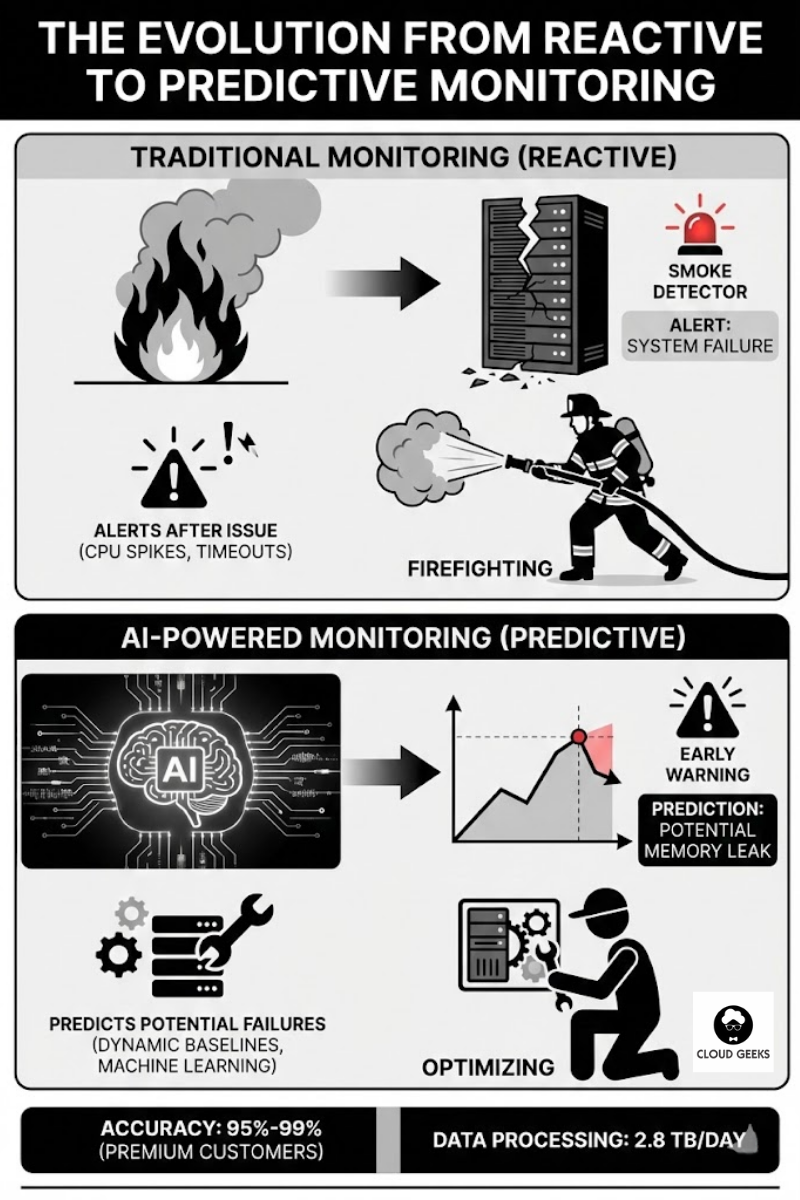
AI-powered monitoring flips this model entirely. According to research from the World Journal of Advanced Research and Reviews, modern AI monitoring systems can achieve accuracy rates from 95% to 99% for premium customers while processing 2.8 terabytes of operational data daily to identify causal relationships between symptoms and underlying issues.
This transformation means your monitoring system doesn’t just collect metrics—it understands them. Machine learning algorithms analyze historical patterns, seasonal trends, and anomalous behavior to predict potential failures before they occur. Instead of waiting for a server to crash, AI can detect early warning signs like gradual memory leaks or increasing response times that indicate imminent problems.
The business impact is significant. Predictive monitoring reduces mean time to resolution (MTTR) from hours to minutes. It prevents outages that could cost thousands in lost sales. More importantly, it frees your technical teams to focus on innovation rather than emergency response.
How AI Transforms Traditional Monitoring Approaches
Traditional monitoring relies on static thresholds and rule-based alerts. Set CPU usage alerts at 80%, memory alerts at 90%, and hope these arbitrary numbers catch problems before they become critical. This approach generates countless false positives and misses complex, multi-system issues that don’t trigger individual thresholds.
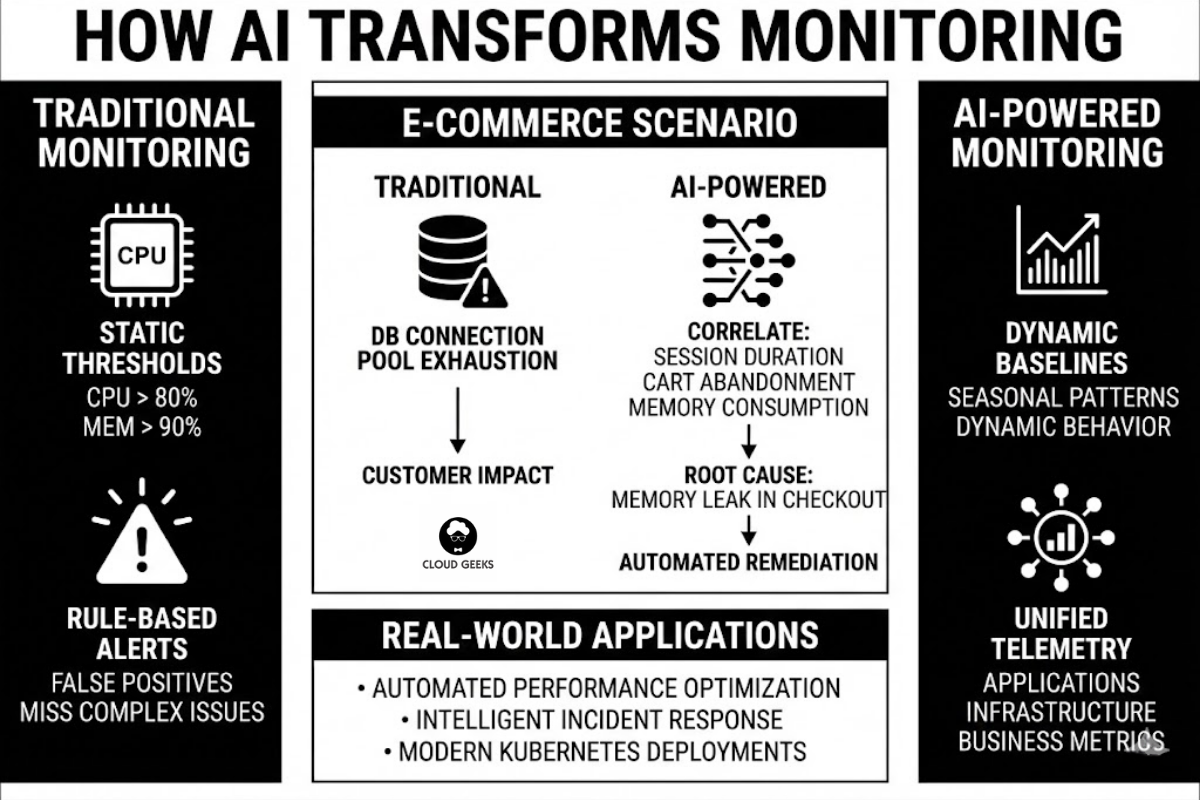
AI monitoring takes a fundamentally different approach. Instead of static rules, machine learning models establish dynamic baselines for normal behavior. These systems understand that Monday morning traffic patterns differ from Friday afternoon loads, that seasonal sales events create different resource demands, and that gradual performance degradation might indicate deeper systemic issues.
Research shows that AI-powered observability directly addresses the breakdown between data collection and actionable insights by applying advanced analytics and machine learning to unify telemetry across applications, infrastructure, and business metrics. This unified approach provides context that traditional monitoring lacks.
Consider a typical e-commerce scenario. Traditional monitoring might alert on database connection pool exhaustion. AI monitoring would correlate this with increased user session duration, elevated cart abandonment rates, and gradual memory consumption growth over the past week. It would identify the root cause—a memory leak in the checkout process—and potentially trigger automated remediation before customers notice any impact.
The sophistication extends beyond individual alerts. AI systems can identify complex cascading failure patterns, where a minor issue in one microservice triggers problems across your entire application stack. This system-wide visibility is crucial as modern applications become increasingly distributed and interdependent.
Real-World Applications and Success Stories
AI monitoring delivers measurable business results across various industries and use cases. Organizations implementing these systems report significant improvements in availability, performance, and operational efficiency.
One critical application area is automated performance optimization. AI-powered monitoring tools enable real-time cloud environment analysis, detecting performance bottlenecks and automatically adjusting resource allocation. This dynamic optimization ensures applications maintain optimal performance without manual intervention.
Intelligent incident response represents another transformative application. Research indicates that AI systems can analyze logs and performance metrics to identify issues before they become critical, enabling automated incident response that minimizes downtime and ensures smooth operations.
Modern Kubernetes deployments exemplify the complexity AI monitoring addresses. Some configurations span thousands of lines of code, creating management challenges that consume countless hours of DevOps team time. AI-powered systems can automatically analyze these complex configurations, identify potential issues, and suggest optimizations.
The data processing capabilities are remarkable. Leading AI monitoring platforms process terabytes of operational data daily, identifying causal relationships between seemingly unrelated symptoms and underlying infrastructure issues. This analysis capability far exceeds human capacity and enables insights that would be impossible to discover manually.
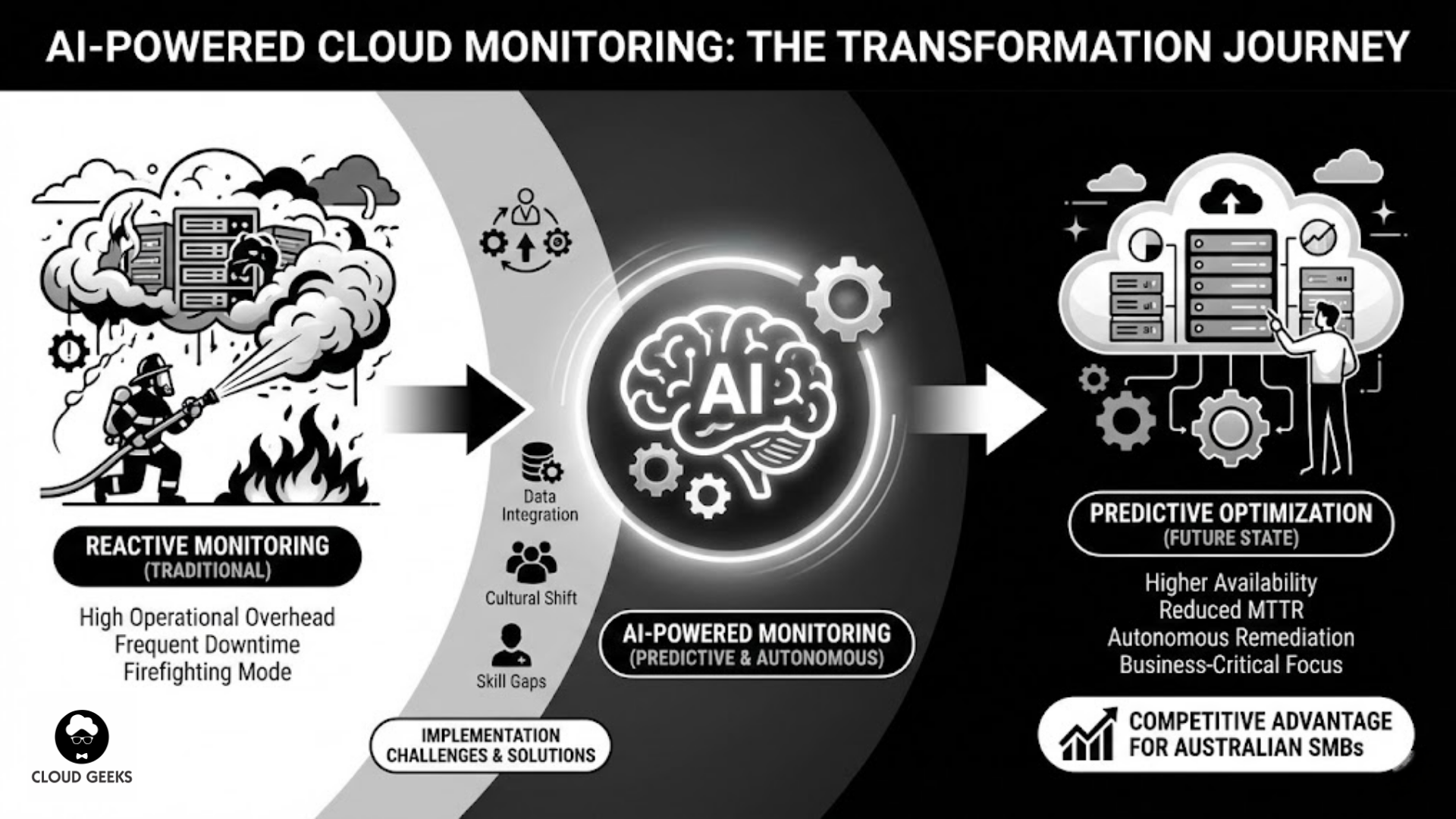
For Australian SMBs, these capabilities translate to competitive advantages. Smaller teams can manage more complex infrastructure without proportional increases in operational overhead. Automated responses handle routine issues, freeing technical staff to focus on business-critical projects and innovation.
Similar to how ContentSage automates content creation workflows, AI monitoring systems automate infrastructure management, allowing teams to scale their capabilities without proportional staff increases.
Overcoming Implementation Challenges
Implementing AI-powered monitoring isn’t without challenges, but understanding common obstacles helps ensure successful adoption.
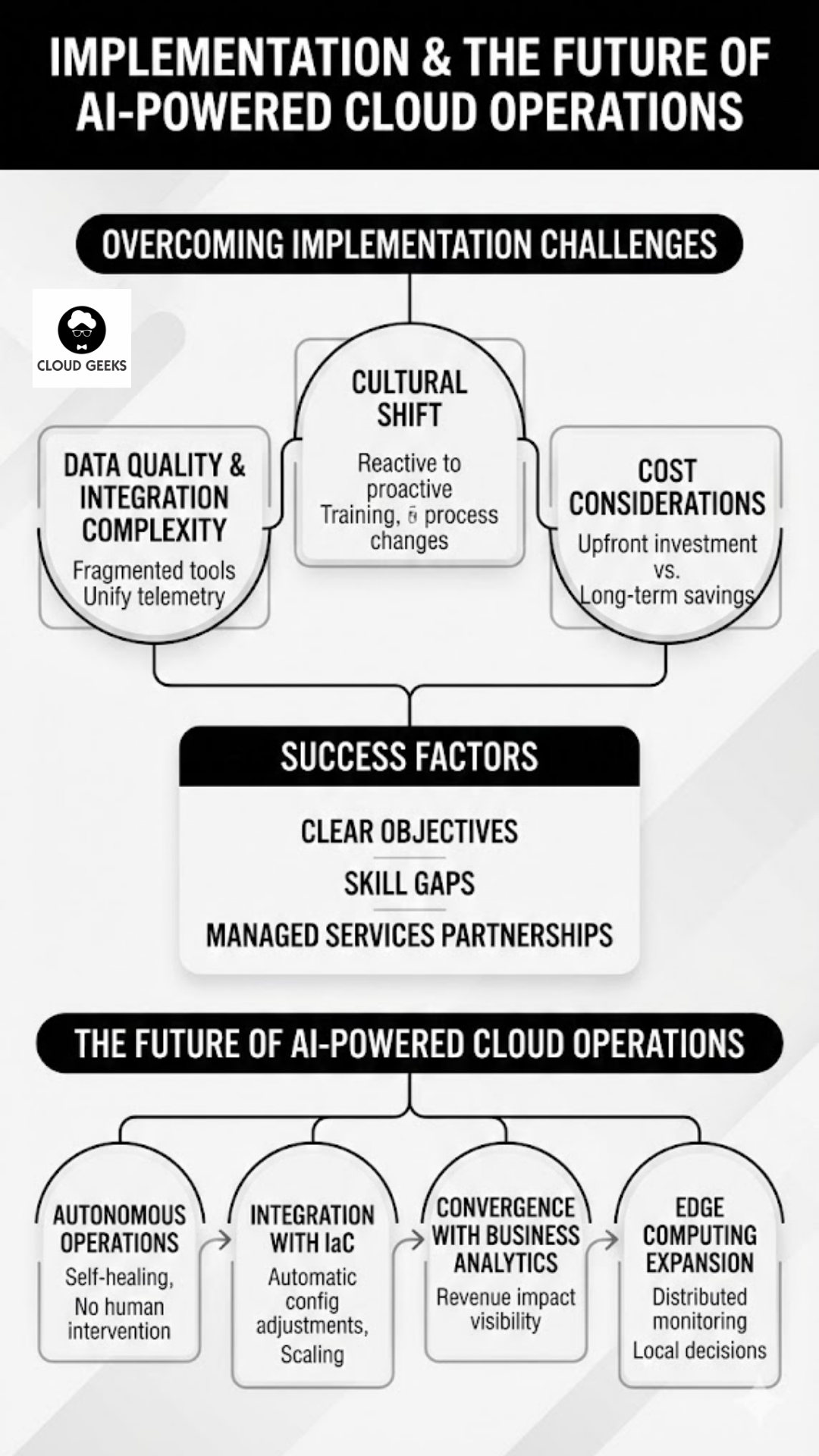
The most significant hurdle is often data quality and integration complexity. Many organizations discover their existing monitoring data is fragmented across multiple tools and platforms. AI systems require comprehensive, high-quality data to generate accurate insights and predictions. This means consolidating telemetry from applications, infrastructure, security tools, and business systems into unified data streams.
Another challenge is the cultural shift from reactive to proactive operations. Teams accustomed to firefighting mode must adapt to preventive maintenance and predictive optimization approaches. This requires training, process changes, and often organizational restructuring.
Cost considerations also factor into implementation decisions. While AI monitoring systems require upfront investment in platforms and integration work, the long-term savings from reduced downtime, improved efficiency, and smaller operational teams typically justify these costs.
Setting clear objectives is crucial for success. Organizations that effectively integrate AI into cloud operations establish specific goals for availability improvements, MTTR reduction, and operational efficiency gains. These measurable objectives help justify investments and track progress.
Skill gaps present ongoing challenges. AI monitoring systems require teams with expertise in machine learning, data analysis, and advanced observability practices. Many organizations address this through training existing staff, hiring specialized talent, or partnering with managed service providers.
The Future of AI-Powered Cloud Operations
The evolution of AI-powered monitoring is accelerating, with emerging trends pointing toward even more sophisticated capabilities.
Autonomous operations represent the next frontier, where AI systems don’t just predict and alert—they automatically remediate issues without human intervention. Predictions for 2026 suggest that enterprises will design hybrid ecosystems spanning hyperscale, private data centers, and edge infrastructure, driven not by cost savings but by control requirements. Power constraints and workload distribution will create new monitoring challenges that AI systems must address.
Integration with Infrastructure as Code (IaC) is creating new possibilities for self-healing infrastructure. AI monitoring systems can now automatically adjust infrastructure configurations, scale resources, and even deploy fixes based on observed issues and predicted needs.
The convergence of AI monitoring with business analytics is creating unprecedented visibility into how infrastructure performance impacts revenue, customer satisfaction, and operational costs. This business-context awareness enables more intelligent optimization decisions.
Edge computing expansion will require distributed AI monitoring capabilities that can operate with limited connectivity and local decision-making authority. This evolution will push monitoring intelligence closer to applications and users.
Conclusion: Key Takeaways for Australian SMBs
AI-powered monitoring represents a fundamental shift from reactive firefighting to predictive optimization in cloud infrastructure management. The technology has matured beyond experimental implementations to deliver measurable business value through improved availability, reduced operational costs, and enhanced team productivity.
For Australian SMBs considering AI monitoring implementation, focus on these critical success factors:
- Establish clear objectives and measurable goals
- Invest in data quality and integration infrastructure
- Plan for cultural and process changes within your operations teams
- Consider managed services or partnerships to address skill gaps
The competitive advantages are clear. Organizations implementing AI monitoring reduce downtime, improve customer experience, and free technical teams to focus on innovation rather than incident response.
As cloud environments become increasingly complex and business-critical, predictive monitoring capabilities will transition from competitive advantage to operational necessity. The question isn’t whether AI will transform cloud monitoring—it’s whether your organization will lead this transformation or be forced to catch up.
Ready to implement AI-powered monitoring for your cloud infrastructure? Contact our team at CloudGeeks to discuss how we can help you transition from reactive firefighting to predictive optimization. Start planning your AI monitoring strategy today to ensure your infrastructure can support tomorrow’s business demands.
Related Articles
- Multi-Cloud Strategy for Australian Businesses: AWS vs Azure vs GCP
- Azure vs AWS for Australian Businesses: Complete Comparison
- Cloud Migration ROI: Calculating Real Costs for Australian SMBs
- Building a Cybersecurity-First Culture in the Age of AI
- Rate Limiting Strategies to Protect Your Australian Business APIs
Pairing cloud infrastructure with a professional website amplifies your online presence. Cosmos Web Tech builds high-performance sites that make the most of solid hosting foundations.
Part of the Ganda Tech Services family, Cloud Geeks delivers specialist IT and cloud solutions for Australian small and medium businesses.